The Tragic Fate of the Toy Boy
Bridget Jones: Mad About the BoyThe Tragic Fate of the Toy Boy is a newspaper article by Ellen Boschup that presents relationships between older women and younger men as a story of predation and harm. Read by Bridget Jones while she is already managing household demands, it becomes more than a lurid piece of commentary: her reaction makes visible the damage that confident-sounding generalizations can do when they reduce private relationships to a fashionable social type.
The Article’s Argument
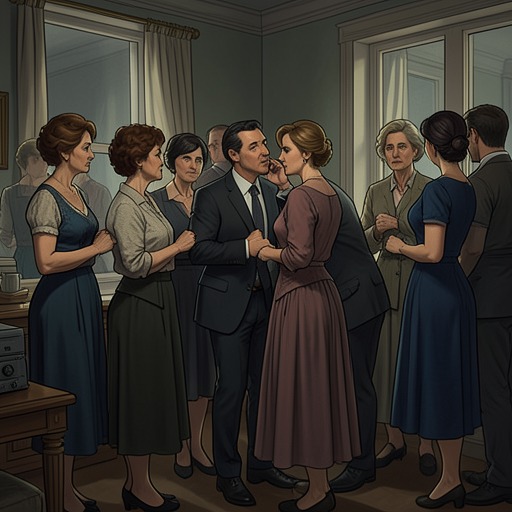
The headline announces a sudden rise in younger male partners, which the article links to medical science preserving women’s youthful appearance and middle-aged women devoting time and money to that effort. It names Ellen Barkin, Madonna, and Sam Taylor-Wood as examples, then labels older women who pursue younger men as cougars. Its opening account presents the arrangement as an apparent exchange of advantages: the women gain youthful, vigorous sex and companionship, while the men gain an experienced lover and entry to a glamorous world, including luxury travel and social connections. The article also imagines that these relationships carry no pressure to have babies or succeed in a career.
That enticing picture reverses into a cautionary tale. The younger men are recast as defenceless prey, supposedly left sexually exhausted, with damaged self-esteem and lost time for career-building and starting a family. The article allows that some, such as Ashton Kutcher, may use a relationship to advance their profiles, but presents most as abandoned and returned to sordid flats and bedsits, where friends, family, and colleagues supposedly scorn them. In this account, the older woman moves on to another partner while the younger man is left diminished. The argument treats both generations as types: the woman as a calculating predator, the man as a vulnerable victim.
Bridget’s Encounter with the Story
Bridget comes across the article in a newspaper that Roxster had been reading. At the time, she is juggling a phone call about an email involving George and concern about Mabel’s finger. She tries to keep the call going while attending to cheese and cabbage, then clicks off and returns to the article, reading as she eats cabbage and takes a piece of Nicorette. The domestic interruptions give the piece an unceremonious setting, but her attention is captured: she reels as she reads and eventually slumps over the table.
The article’s judgments are especially charged in a story where Bridget’s own romantic life and sexual self-understanding are under scrutiny. Talitha has earlier argued that women can turn back the clock by altering the visible signs of age, even as Tom punctures the fantasy with a joke about the source of her hair. The newspaper piece turns a similar concern with youth and appearance into a sweeping account of older women’s motives. Bridget does not simply accept that account as a description of her life; her physical collapse registers its force without making its claims true.
Bridget’s Rebuttal to Social Generalization
Bridget’s objection is directed at the way the article manufactures authority. She condemns its glib social generalizations, comparing the process to inventing a sudden trend in dining rooms and then writing as if a brief deadline piece were the conclusion of years of research. In her view, such commentary can be assembled from overheard conversation in a gastropub and a couple of blurry photographs in Heat magazine, yet still claim the power to explain people’s lives and relationships.
Her criticism is not a denial that people may be hurt in relationships; it is a protest against treating a loose category as established social fact. The article’s neat reversal—from glamorous arrangement to ruined young men—depends on broad assumptions about women’s motives, men’s vulnerability, and what counts as a worthwhile career or family life. Bridget recognizes that the rhetorical certainty exceeds the evidence she believes lies behind it, and she fears the harm such certainty can cause.
Appearance, Age, and Media Pressure
The article belongs to a recurring pattern in which media images and advice make women’s appearance seem like a personal project with social consequences. Bridget has already observed that people treat women differently depending on whether they are fat or dressed up, and has compared advertising’s preference for idealized models to a world where ordinary people are made to feel inadequate beside a favoured minority. Later, a story criticizing Jessica Biel’s pantsuit prompts her to worry that women are judged by their distance from sexiness; after buying Grazia, she concludes that her clothes are outdated and imagines a new uniform for the school run.
Against that background, The Tragic Fate of the Toy Boy links youthful appearance to women’s romantic choices, then moralizes those choices as exploitation. Talitha’s breezy assurance that Botox is like going to the dentist offers another example of the period’s casual language around cosmetic intervention; Bridget nevertheless goes to a basement off Harley Street feeling uneasy about the procedure. Together, these moments show how advice, fashion coverage, and social commentary make age and desirability feel manageable through consumption while also exposing women to judgment for the choices they make. The article’s significance lies in that contradiction: it borrows the language of social diagnosis, but Bridget’s reading reveals how easily such diagnosis becomes another instrument for policing women’s desire.